

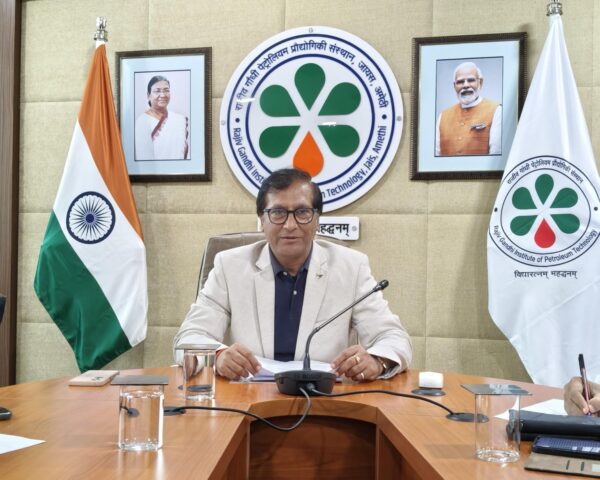
Jais, Amethi : The Rajiv Gandhi Institute of Petroleum Technology (RGIPT), Jais, successfully concluded its socio-technical festival, ‘Souhardya 2026,’ with a strong emphasis on social responsibility, technological innovation, sustainable development, entrepreneurship, and community engagement.
Held on October 30–31, 2026, the two-day event brought together prominent academicians, industry experts, faculty members, and students to deliberate on the critical role of technology and innovation in addressing contemporary societal challenges.
The inauguration ceremony commenced with the ceremonial felicitation of distinguished guests. Dr. Arvind Singh, Coordinator of the Social Council, delivered the welcome address, underscoring the importance of embracing modern technological advancements while preserving traditional arts and cultural heritage. He urged students to align technical innovations with the real needs of society.
The Dean of Student Welfare highlighted that ‘Souhardya’ serves as a vital platform to encourage social awareness and responsible innovation, emphasizing that true success lies in meaningful learning experiences and lasting bonds rather than awards alone.
Distinguished speakers addressed the gathering with diverse perspectives on nation-building and problem-solving. Dr. Harish Kumar from Defence Materials and Stores Research emphasized the need for sustainable solutions tailored to India’s geographical and cultural diversity, encouraging youth to embrace self-reliance.
Prof. Binisha, an environmental scientist, stressed the significance of inclusivity, creativity, and entrepreneurship, urging students to leverage emerging technologies like artificial intelligence not just to seek jobs, but to become job creators.
Prof. Mahesh G. Thakkar, Director of the Birbal Sahni Institute of Palaeosciences, drew attention to the deep connection between science and society, advocating for a strong scientific temperament and civic responsibility.
RGIPT Director Prof. Harish Hirani spotlighted the growing importance of startups and social entrepreneurship in India’s growth trajectory.
Citing examples like the renewable energy initiatives of SELCO India and the cooperative success of Amul, he motivated students to look beyond traditional employment and focus on innovation-driven ventures.
He also commended the institute’s Design and Innovation Product (DIP/DIC) initiatives, encouraging active student participation in developing practical solutions for grassroots challenges.
The core message of ‘Souhardya 2026’ resonated clearly throughout the event: synergizing technology, social consciousness, sustainability, and entrepreneurial mindset to create a lasting, positive impact on society.
The festival featured a vibrant lineup of flagship events, including ‘Nirman’ (a national socio-technical conference), ‘Sociothon’ (a social innovation challenge), science and social exhibitions, ‘Pratibimb’ (a short film competition), and a social-themed reel-making competition. These events successfully fostered dialogue among students, researchers, and innovators, reinforcing RGIPT’s unwavering commitment to shaping technically proficient, socially responsible, and innovation-driven future leaders.










, Jais, successfully concluded its socio-technical)